
An electric or pneumatic linear actuator? We don’t get asked that question very often, but almost every engineer or designer encounters it when developing a new machine or process.
That’s not surprising: the range of linear actuators is vast. Piston-rod actuators, in particular, come in many variants, both pneumatic and electric. There are several ways to convert a motor’s rotary motion into linear motion. Which actuator is best suited depends on factors such as application requirements, energy consumption, and cost.
The term “electric actuator” encompasses various drive systems, such as a ball screw, threaded spindle, (toothed) belt, rack and pinion, and linear motor. The choice between pneumatic and electric is particularly relevant for electric variants featuring a ball screw, (toothed) belt, and rod drive.
Not sure which linear actuator is best for your application? Below, we break down the options into two drive principles. If you’d like customized advice afterward, please contact LDA.
When is it best to use a pneumatic actuator?
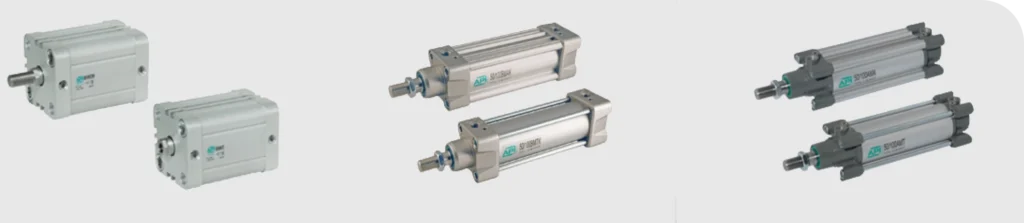
A pneumatic linear actuator delivers high speeds and high forces in a compact installation space. This type of actuator is particularly well-suited for fast point-to-point movements. It is less suitable for applications involving very fast or abrupt stops. The most commonly used pneumatic actuators are the cylinder and the rodless cylinder.
Does your machine already contain multiple pneumatic components? If so, it often makes financial sense to choose a pneumatic actuator as well, provided the application allows it. Companies also frequently opt for pneumatic actuators in potentially explosive environments and areas with increased safety risks (such as those caused by heat generation).
Are you looking for an ATEX actuator?
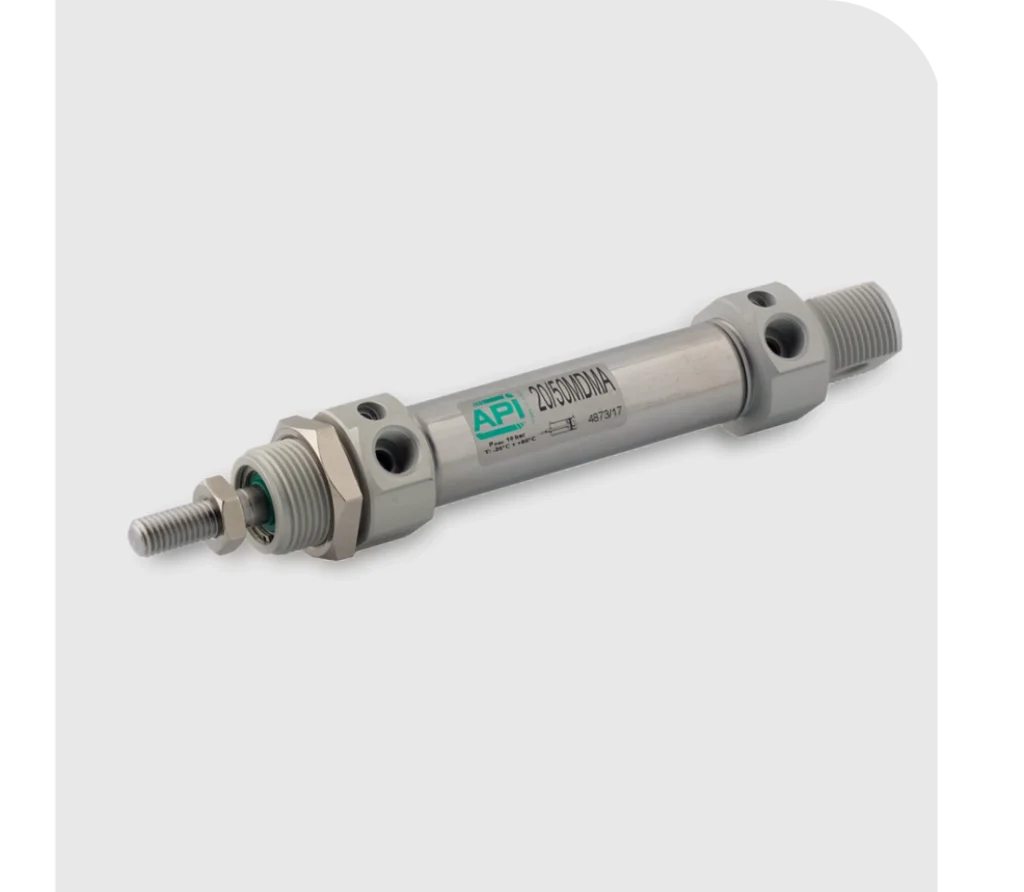
We offer a wide range of cylinders suitable for various ATEX zones, from standard pneumatic actuators such as the
ISO 6432 to industry-specific applications. These cylinders are versatile and can be used in a wide variety of applications. Check out our catalog or website to see our ATEX cylinders!
When is it best to use an electric actuator?
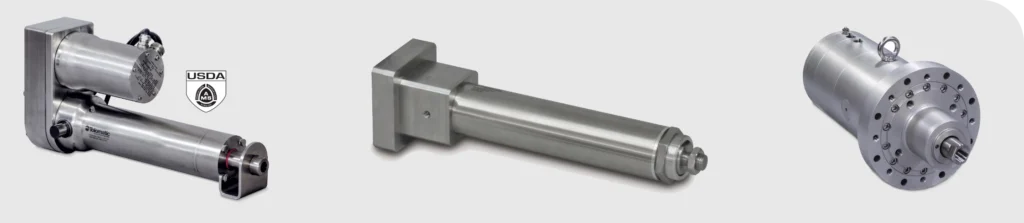
An electric linear actuator is usually driven by a stepper motor or a servo motor. These enable precise positioning at various points along the entire length of the linear actuator. It is also possible to obtain accurate feedback on the varying speeds and forces at the different positioning points. This is a major advantage of the electric linear actuator. It is also much easier to make adjustments to the operational parameters during operation with an electric linear actuator.
The purchase and installation costs for an electric linear actuator are significantly higher than those of a pneumatic linear actuator. However, the Total Cost of Ownership is often lower due to the relatively predictable operating costs and simple maintenance.
Most electric linear actuators require only periodic lubrication of a few moving parts. Pneumatic linear actuators, on the other hand, require frequent inspection and replacement of air hoses, valves, and couplings.
Unlike pneumatic actuators, which produce a lot of noise, electric actuators are relatively quiet (provided they are properly adjusted).
Advantages of electric actuators
- High precision: Their movement, speed, and position are adjustable.
- Easy to use: No pumps or air compressors are required.
- Quiet operation: Ideal for environments where a quiet atmosphere is required, such as a laboratory, hospital, or office.
- Energy-efficient: Power is consumed only during operation, and even then, the electric actuator does not consume excess power.
- Clean and safe: No fluid can leak or air escape.
Disadvantages of electric actuators
- Higher initial costs: Each type of electric actuator is more expensive than the others, and these costs increase even further when additional features are involved.
- Insufficient electrical power for heavy loads: If your application requires high torque or rapid movement of heavy components, electric actuators may not be powerful enough.
- Issues with electrical short-circuit feasibility: Due to power consumption, wiring must be handled with care, as must the risk of power surges.
Check out the electric actuators offered by LDA!
From compact applications to heavy-duty industrial processes: LDA supplies electric linear actuators that ensure precise, quiet, and energy-efficient operation. Browse our product line and discover which solution best suits your application.